Roofing FAQs
What’s the Best Roofing Material for Roof Replacement on Long Island?
Asphalt shingles are the best choice for roof replacement on Long Island. Technically made from a combination of materials including asphalt, fiberglass, and mineral granules, asphalt shingles excel in harsh environments and are perfect for Long Island’s weather extremes.

Should I Replace a 20-Year-Old Roof?
Your 20-year-old roof on Long Island should be replaced if it shows signs of wear, including brittle shingles, granule loss, or persistent leaks. While some shingle roofing installations will last longer than 20 years, Long Island’s climate can limit the lifespan of older materials or budget-oriented materials.
What’s the Difference Between Long Island Roof Replacement and Roof Overlay?
The difference between a roof replacement and overlay is that a replacement is a complete tear-off with new shingles, while an overlay lays new shingles over the old ones. On Long Island, where wind resistance is essential, a complete roof replacement is the best choice.
What is the Best Time of Year to Replace a Roof on Long Island?
Late spring or early fall is the best time to replace a roof on Long Island, but an expert roofer can replace a roof at any time of year as long as temperatures are above freezing.
Does Homeowners Insurance Cover Roof Leak Repairs on Long Island?
Most homeowners insurance policies cover roof leak repairs if the damage is caused by a sudden and accidental event. Storm damage and fallen tree limbs are common examples. However, your homeowners insurance won’t cover a leaking roof caused by wear and tear, age, or neglect.
Can a Damaged Roof be Repaired? The 25% Rule on Long Island
Yes, a damaged roof can be repaired when the problem is localized to a specific feature or area of the roof. Long Island roofing contractors typically follow a 25% rule. If more than 25% of your roof is damaged or significantly degraded, a complete roof replacement is usually more cost-efficient.
Why is There Moss and Algae on the North-Facing Side of My Long Island Roof?
Moss is common on north-facing roof slopes on Long Island because of limited sunlight and excess moisture. Unlike the southern slope of your roof, which sees direct UV light, the north side is typically damp and shaded. In areas of Suffolk County, moss and algae thrive because of high humidity and coastal air.
How Does Salt Air Affect Metal Flashing in South Shore Homes?
Salt air corrosion degrades rooftop flashing by accelerating the oxidation process. It triggers a chemical reaction that breaks down protective coatings and causes pitting, rust, and structural leaks.
What are the Signs of a Damaged Roof Deck on Long Island?
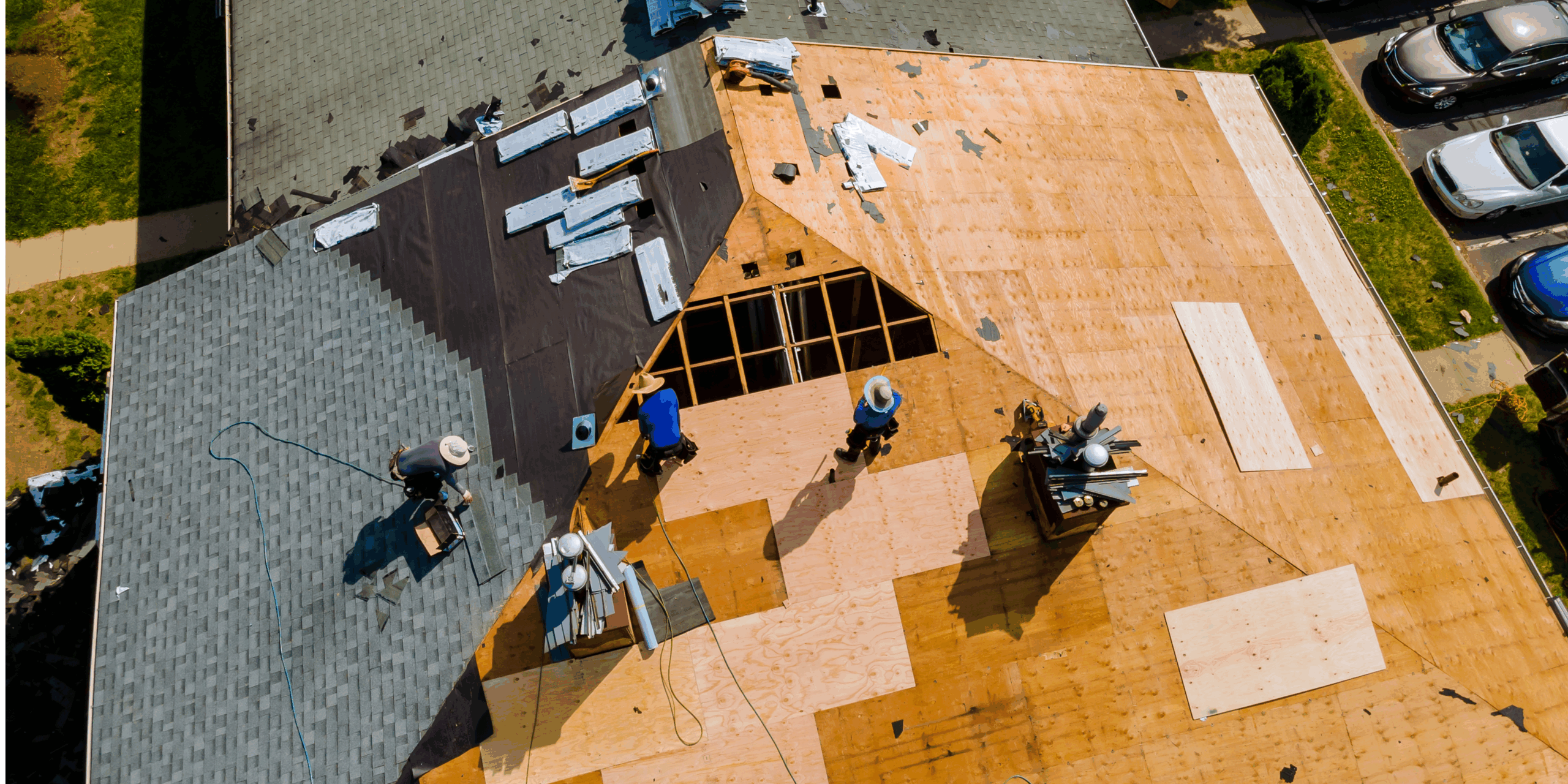
Signs and symptoms of a damaged roof deck include sagging and dipping, cracks and splits, and interior water stains and leaks. The roof deck is the structural base of your entire roofing system. It’s a plywood layer that forms the surface of the roof before shingles are installed. Any damage to the roof deck can compromise the structure and safety of your home.
Should You Upgrade Attic Ventilation When Finishing Your Attic Space?
You should absolutely upgrade your attic ventilation when you transform your attic into a finished living space. Long Island homeowners who overlook ventilation can suffer from moisture problems, requiring repairs or early roof replacement.
Why is There Plywood Showing Through My Long Island Roof Shingles?
If you can see plywood through your Long Island roof shingles, you could have damage caused by wind uplift, a thermal seal failure, or plywood buckling.
It’s not just a cosmetic problem. Exposed plywood means that your home’s weatherproof barrier is compromised. If you see bare plywood on your rooftop, you can talk to Renew Roofing Solutions for a detailed roof inspection and repair.
Can You Repair Just a Section of a Roof on Long Island?
Yes, you can repair only a section of your roof on Long Island if the damage is localized and the rest of the roof is structurally sound. A partial roof repair is a cost-efficient solution for isolated issues like blow-off of a few shingles or an impact from a tree limb.